Buying property in Kenya as a foreigner is legal and common on the coast, but the rules differ from those for Kenyan citizens. The key limit is tenure: non-citizens can hold land only on leasehold, for up to 99 years. This guide explains that rule, the steps of a typical purchase, the costs to budget for, and the questions to put to your advocate before you pay anything.
Key takeaways
- Under Article 65 of the Constitution of Kenya, a non-citizen may hold land only on leasehold, for a term of no more than 99 years.
- A document that tries to give a non-citizen freehold, or a lease longer than 99 years, takes effect as a 99-year lease.
- A company counts as a citizen only if all of its shareholders are Kenyan citizens, so a company with a foreign shareholder is treated as a non-citizen.
- Dealings in agricultural land need Land Control Board consent, and the Land Control Act directs boards to refuse consent for sales to non-citizens unless an exemption applies.
- Stamp duty on a transfer is 4% of value in gazetted towns and municipalities (Diani is on the list) and 2% elsewhere, paid by the buyer.
- Confirm every legal and tax point for your own purchase with a Kenyan advocate and with the Kenya Revenue Authority (KRA).
Can a foreigner buy property in Kenya?
Yes. Kenyan law does not stop non-citizens from buying houses, villas, apartments or plots. It limits the type of interest they can hold. Article 65 of the Constitution of Kenya says a person who is not a citizen may hold land only on leasehold tenure, and that the lease cannot exceed 99 years.
In practice this means a foreign buyer receives a registered lease rather than an absolute (freehold) title. A 99-year lease is a long, registrable, transferable interest. You can sell it, mortgage it where a lender agrees, and pass it on through your estate. What you cannot do is hold the land outright forever, as a citizen with freehold can.
What happens if the title is freehold?
Article 65(2) deals with this directly. If a document would otherwise give a non-citizen freehold, or a lease longer than 99 years, it is treated as giving a 99-year leasehold and no more. Commentators also note that the Sixth Schedule to the Constitution converted existing non-citizen freeholds into 99-year leases when the Constitution took effect in 2010 (Kenyans.co.ke explainer, November 2026).
So the question to ask is not "can I buy this freehold plot?" but "how will my interest be created and registered?". On a freehold plot, your advocate will usually structure the transaction so that a 99-year lease is granted and registered in your name. On a plot that is already leasehold, check how many years remain. Lenders care about this: KCB's diaspora mortgage FAQ, for example, asks for a title with a minimum lease term of 35 years (KCB Diaspora FAQ).
Can a foreigner buy through a Kenyan company?
You can, but it does not get around the leasehold rule. Article 65(3) says a body corporate is a citizen only if it is wholly owned by citizens. A Kenyan-registered company with even one non-citizen shareholder is treated as a non-citizen for landholding, so it too is limited to a lease of up to 99 years.
Some buyers still use a company for practical reasons, such as joint ownership or succession planning. That is a decision for your advocate and tax adviser, not a way to obtain freehold.
What about agricultural land and the Land Control Board?
This is where foreign buyers need the most care. The Land Control Act (Cap. 302) makes sales, transfers, leases, charges and subdivisions of agricultural land in a land control area "controlled transactions". These need consent from the local Land Control Board, and the application must be made within six months of the agreement (CAHF review of the Land Control Act).
Section 9(1)(c) directs boards to refuse consent where the land is going to a non-citizen, or to a company or co-operative whose members are not all citizens. A controlled transaction without consent becomes void. The President can exempt land or persons from the Act by notice in the Kenya Gazette.
The law may change. A Land Control Bill, 2023, which would replace the Act, was listed as awaiting third reading in the National Assembly in mid-2026 (Mzalendo bill tracker). Until a new law is passed, ask your advocate to confirm in writing whether the plot you want is controlled agricultural land, and if so, how the purchase can lawfully proceed.
What is the process for buying property in Kenya as a foreigner?
Every transaction is different, but most purchases follow these steps:
- Appoint your own advocate. Choose a Kenyan advocate who acts only for you, not for the seller or developer. Check that they hold a current practising certificate with the Law Society of Kenya.
- Get a KRA PIN. Non-residents register for a PIN through KRA's iTax system. KRA asks non-citizen investors living abroad for a notarised copy of their passport (KRA PIN requirements).
- Carry out due diligence. Your advocate runs an official search at the land registry (or on Ardhisasa where that registry has moved online) to confirm the registered owner, the tenure, and any charges, cautions or restrictions. Our sister site explains this in Buying Land in Kenya: The Due Diligence Checklist.
- Check land use and approvals. Confirm the zoning, whether Land Control Board consent is needed, and, for a new build, the county building approval and environmental licence.
- Agree and sign the sale agreement. Your advocate negotiates a written agreement covering price, payment dates, completion and what happens if either side defaults. Pay any deposit only to an account your advocate has verified.
- Obtain consents and clearances. These may include Land Control Board consent, land rates and land rent clearance, and, if the seller has a mortgage, the lender's discharge.
- Valuation and stamp duty. A government valuer assesses the property, and the buyer pays stamp duty on that value through eCitizen.
- Registration. The transfer, or the new 99-year lease, is registered at the land registry, and you receive the registered document in your name.
Expect the process to take longer if consents, valuations or registry backlogs are involved.
How much does it cost to buy property in Kenya?
The purchase price is only part of the bill. The main extra costs are summarised below.
| Cost | Who usually pays | Current rule or rate |
|---|---|---|
| Stamp duty | Buyer | 4% of value in gazetted towns and municipalities, 2% elsewhere |
| Advocate's fees | Each party pays their own | Guided by the Advocates (Remuneration) Order; agree a quote in writing |
| Valuation and registration fees | Buyer | Set by the Ministry of Lands; ask your advocate for current amounts |
| Capital gains tax (CGT) | Seller | 15% of the net gain since 1 January 2023 |
| VAT | Depends on the sale | Some developer sales quote prices that exclude VAT "where applicable"; ask |
| Mortgage costs, if any | Buyer | Arrangement, valuation, legal and insurance fees |
On stamp duty, the Ministry of Lands directed land registrars in April 2024 to charge 4% on transfers in gazetted towns and municipalities, and the list published with that directive includes Diani and Kwale (CMS Daly Inamdar, April 2024). As a simple illustration, 4% of KSh 29,550,000 is KSh 1,182,000, and 2% is KSh 591,000. The actual figure depends on the government valuation and on whether a particular plot falls inside a municipal boundary, which your advocate will confirm.
Stamp duty may also change. In October 2026 the President announced a proposal to exempt land transactions of KSh 1 million or less and to bring in progressive rates for larger ones, subject to Parliament (Citizen Digital, 20 October 2026). Check the position on the day you buy.
On CGT, KRA says the rate is 15% of the net gain and the seller pays it when the transfer is registered. This matters to you as a future seller: keep every receipt for the price, fees and improvements, because these reduce the taxable gain.
Can a foreigner get a mortgage in Kenya?
Kenyan banks lend mainly to residents and to Kenyan citizens living abroad. KCB, Co-operative Bank, Equity and National Bank all market diaspora mortgages, but their published criteria are written for Kenyans abroad. Standard Chartered's non-resident mortgage page also describes the product as being for non-resident Kenyans (Standard Chartered Kenya).
If you are not a Kenyan citizen, ask lenders directly whether you qualify and on what terms. Many foreign buyers pay cash or use staged payments with a developer. Our guide to financing a holiday home in Kenya compares these options.
What taxes apply if you rent the property out?
If you let the property, rental tax depends on your residence status. KRA's eRITS portal says Monthly Rental Income tax (MRI) is a flat, final 7.5% of gross residential rent for resident landlords earning between KSh 288,000 and KSh 15 million a year, and that non-resident landlords are taxed at 30% of gross rent instead (KRA eRITS FAQs). The Finance Act 2026 set out how non-residents register, file and pay that 30%, due by the 20th of the following month, from 1 July 2026 (Kenyans.co.ke).
Short-term holiday lets also need registration with the Tourism Regulatory Authority. Our guide to owning a villa in Diani covers this. Speak to a KRA-registered tax agent about your own position, including any tax treaty between Kenya and your home country.
Faraji Marijani: a ready-made option in Galu
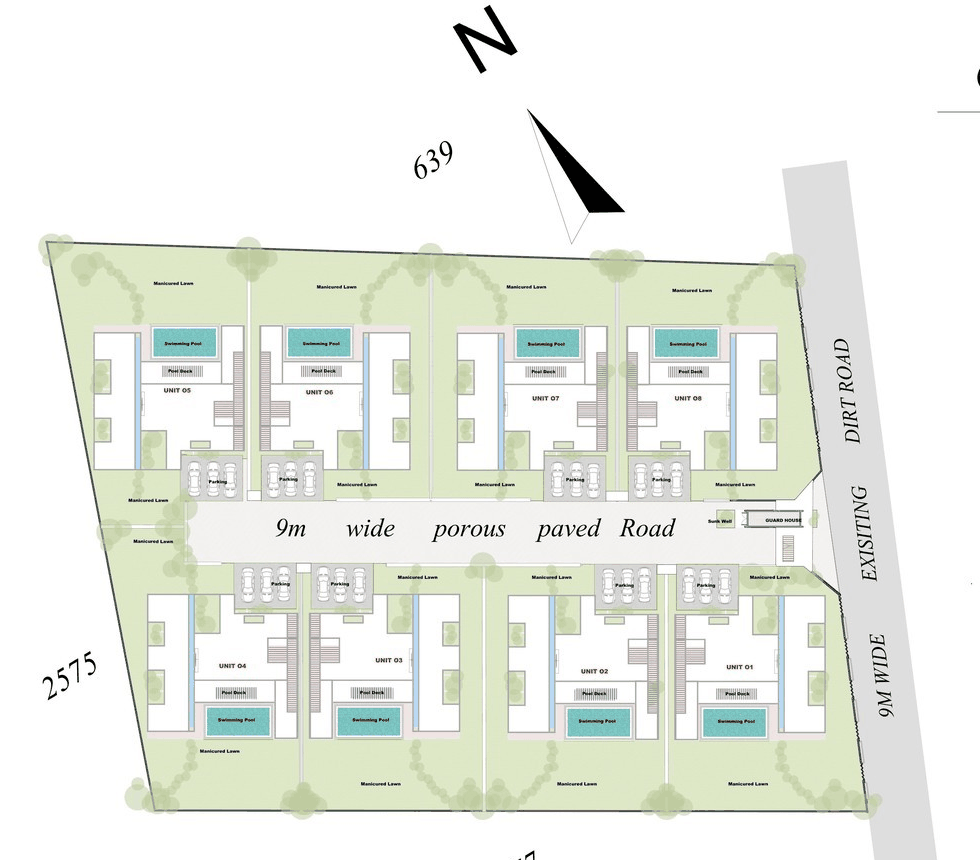
Faraji Marijani is a gated community of eight private-pool villas in Galu, Diani Beach, Kwale County, developed by Msingi Engineering Group (Msingi). Each villa sits on a titled quarter-acre plot (0.0940 ha) with its own private title. The single-level villas have three en-suite bedrooms, 214 m² inside, a 9 × 4 m private pool, an 80 m² deck and staff quarters (DSQ). The plot and villa package starts from KSh 29,550,000, excluding statutory fees and VAT where applicable; prices may change. As of November 2026, 7 of the 8 plots are available. Buyers can pay cash, use bank financing, or make staged payments as the villa is built, within 24 months. Foreign buyers should have their own advocate confirm how their interest will be registered. See the villas for sale in Diani or book a viewing.
Frequently asked questions
Can a foreigner own freehold land in Kenya?
No. Article 65 of the Constitution of Kenya allows non-citizens to hold land only on leasehold, for a term of up to 99 years. If a document tries to give a non-citizen freehold, or a lease longer than 99 years, the law treats it as a 99-year lease. A Kenyan company with any foreign shareholder is also treated as a non-citizen for this purpose.
How long is a lease for a foreigner in Kenya?
A non-citizen's lease cannot be longer than 99 years. If you buy an existing leasehold, check how many years remain, because the value of a lease and a bank's willingness to lend against it fall as the remaining term shortens. Your advocate should confirm the start date and the term shown on the registered title or lease.
Can a foreigner buy agricultural land in Kenya?
Generally not without an exemption. Under the Land Control Act, sales and leases of agricultural land in a land control area need Land Control Board consent, and section 9(1)(c) directs boards to refuse consent for transfers to non-citizens. The President can grant exemptions by gazette notice. A replacement Land Control Bill was still before Parliament in 2026.
What is the stamp duty rate for property in Diani?
Stamp duty in Kenya is 4% of the property's value in gazetted towns and municipalities and 2% elsewhere. Diani is on the list of municipalities published with the Ministry of Lands' April 2024 directive. The duty is worked out on a government valuation, paid by the buyer, and confirmed by your advocate for the specific plot.
Do I need to live in Kenya to buy property there?
No. You can buy while living abroad. You will need a KRA PIN, which non-residents apply for online through iTax, and a Kenyan advocate to run the searches and registration. Documents signed abroad usually need to be notarised, and your advocate may suggest a power of attorney so someone in Kenya can sign for you.
Who pays capital gains tax when property is sold in Kenya?
The seller pays capital gains tax. KRA says the rate is 15% of the net gain, due when the transfer is registered in the buyer's name. The net gain is the sale price less the costs of buying, selling and improving the property, so keep receipts from the day you buy.
Sources
- Constitution of Kenya, 2010 — Article 65 (Kenya Law)
- Explained: How Foreigners Can Legally Acquire Land and Property in Kenya (Kenyans.co.ke, November 2026)
- Land Control Act, Cap. 302 (Kenya Law)
- Land Control Act (Cap 302), 1967 — CAHF legal review
- The Land Control Bill, 2023 (Mzalendo)
- The Ministry of Lands Raises Stamp Duty on Land Transfers (CMS Daly Inamdar, April 2024)
- Ministry of Lands Directs Immediate Implementation of 4% Stamp Duty (Kenyans.co.ke, April 2024)
- President Ruto announces new measures to lower taxes, land costs (Citizen Digital, October 2026)
- Capital Gains Tax (Kenya Revenue Authority)
- Requirements for KRA PIN registration (Kenya Revenue Authority)
- eRITS FAQs — Monthly Rental Income (Kenya Revenue Authority)
- KRA Explains New Rental Tax Rules Targeting Landlords Living Abroad (Kenyans.co.ke)
- Diaspora FAQs (KCB Bank Kenya)
- Non-resident mortgages (Standard Chartered Kenya)
See Faraji Marijani for yourself
Eight private-pool villas on titled quarter-acre plots in Galu, Diani. Plot and villa from KSh 29.55M.
Book a private viewing