Financing a holiday home in Kenya is different from financing a family home. Mortgage interest is high by international standards, the cheapest state-backed loans are reserved for first homes people live in, and many coastal buyers combine sources: savings, a loan secured on another property, and staged payments to a developer. This guide sets out each option with current figures and the questions to ask your bank and advocate.
Key takeaways
- The Central Bank of Kenya (CBK) held its policy rate, the Central Bank Rate, at 8.75% on 7 October 2026, and average commercial bank lending rates were 14.4% in September 2026.
- The average mortgage interest rate in Kenya fell to about 13.5% in 2025, from 15.2% in 2024, according to reporting on the CBK's Bank Supervision Annual Report.
- Kenya Mortgage Refinance Company (KMRC)-backed loans are aimed at owner-occupied first homes; a second home bought for holidays or investment does not qualify.
- Diaspora mortgages from Kenyan banks are designed for Kenyan citizens living abroad and require notarised income documents and a title with enough lease term left.
- Staged payments to a developer spread the cost over the build, but they carry off-plan risk, so tie each payment to visible progress.
- Budget for stamp duty, legal and valuation fees, and lender charges on top of the price, and confirm every figure with your bank, advocate or KRA.
What are the ways to finance a holiday home in Kenya?
Most buyers use one or more of these five routes.
| Option | How it works | Main advantages | Main drawbacks |
|---|---|---|---|
| Cash | Pay from savings or the sale of another asset | Simplest; no interest; stronger negotiating position | Ties up capital; currency risk if funds come from abroad |
| Bank mortgage | Kenyan bank lends against the property | Spreads cost over up to 15–20 years | High interest; deposit and fees; income checks |
| Diaspora mortgage | Bank product for Kenyans living abroad | Apply remotely; some banks lend in foreign currency | For Kenyan citizens; notarised documents needed |
| Equity release | Borrow against property you already own | Can be cheaper or simpler than a new mortgage | Puts your existing property at risk |
| Staged payments | Pay a developer in instalments during construction | No interest; matches the build | Off-plan risk; payments end before handover |
What are mortgage rates in Kenya in 2026?
Kenyan mortgages are expensive compared with many countries, though rates have eased. On 7 October 2026 the CBK's Monetary Policy Committee kept the Central Bank Rate at 8.75%. The same statement put average commercial bank lending rates at 14.4% in September 2026, down from 17.2% in November 2024.
For mortgages specifically, Kenyans.co.ke reported in September 2026 that the CBK's 2025 Bank Supervision Annual Report showed the average mortgage interest rate falling to 13.5% in 2025 from 15.2% in 2024 (Kenyans.co.ke, 23 September 2026). The market is small: about 30,762 mortgage accounts at the end of 2025, with an average loan of around KSh 10 million.
Ask each lender for its current rate, whether it is fixed or variable, and the total cost of credit. With a variable rate, your repayment can change whenever the bank changes its rate.
What would a mortgage cost each month? As a simple illustration only, here is the arithmetic for a KSh 20 million loan using a standard repayment formula. These are not quotes; your bank's rate, fees and term will differ.
| Loan | Interest rate | Term | Approximate monthly repayment |
|---|---|---|---|
| KSh 20,000,000 | 13.5% | 15 years | KSh 259,700 |
| KSh 20,000,000 | 14.4% | 15 years | KSh 271,700 |
| KSh 20,000,000 | 13.5% | 20 years | KSh 241,500 |
Lenders also test affordability against your verified income and usually ask for a deposit, so the loan may be smaller than the price.
Can you use a KMRC mortgage for a holiday home?
Usually not. The Kenya Mortgage Refinance Company (KMRC) refinances banks and SACCOs that lend to home buyers, allowing them to offer cheaper, longer loans. Business Daily reported that KMRC focuses on first-time owners buying a home they will live in, and that a second home bought for investment does not qualify (Business Daily, April 2025). The same report said KMRC uses KSh 10.5 million as a loan-size benchmark.
Co-operative Bank's diaspora page, for example, lists a KMRC-backed product at 9.5% for family-occupied homes, with a maximum loan of KSh 10.5 million (Co-op Bank Diaspora). A holiday villa is unlikely to meet the owner-occupier condition, so plan on commercial terms.
How do diaspora mortgages work?
Several Kenyan banks offer mortgages to Kenyans living abroad. Their published terms give a sense of what to expect:
- KCB asks for notarised payslips and bank statements for the latest six months, an employer letter, an ID or passport with a KRA PIN, an international credit report, and a title with a minimum lease term of 35 years. Income must come from the country where you live (KCB Diaspora FAQ).
- Co-operative Bank lists up to 80% financing over up to 15 years for buying a developed property, and says mortgages are available in Kenya shillings, US dollars, pounds and euros (Co-op Bank Diaspora).
- Standard Chartered describes its non-resident mortgage as being for non-resident Kenyans, with loans of up to KSh 100 million and terms of up to 20 years, plus an arrangement fee (Standard Chartered Kenya).
If you are not a Kenyan citizen, ask lenders directly whether you qualify. Our guide to buying property in Kenya as a foreigner explains the 99-year leasehold rule, which also affects how a bank views the security. For Kenyans abroad planning a build rather than a purchase, see Building a House in Kenya from the Diaspora.
Can you borrow against a property you already own?
Yes. Equity release means taking a loan secured on a home or other property you already own, then using the money to buy the holiday home. Co-operative Bank's diaspora page, for instance, lists equity release of up to 90% over up to 15 years.
This can be simpler than a mortgage on the new property, especially during construction, when there is no finished home to value. The risk is that your existing property is on the line if you cannot repay. Compare the rate and fees with a conventional mortgage before you decide.
How do staged payments to a developer work?
With staged payments, you pay the developer in instalments during construction rather than all at once. A typical schedule might begin with a deposit on signing, then payments at agreed stages such as foundations, walls, roof and finishes, with the balance at completion.
The appeal is clear: no interest, and payments roughly match what you can see on site. The risk is the same as any off-plan purchase. Kenya has no mandatory escrow for buyers' deposits, so check the title, approvals and contract before paying. Our off-plan checklist covers this step by step.
Staged payments and a mortgage can be combined. Some buyers pay early stages from savings and arrange a bank loan for the balance on completion. Ask your bank early whether it will lend on that basis and what it needs to see.
What should cash buyers think about?
Paying cash avoids interest and lender fees, and can make your offer more attractive. A few practical points:
- Move money through banks. Kenyan advocates and estate agents have anti-money-laundering duties, so expect to show where funds came from.
- Watch the exchange rate. If you are converting from another currency, rates can move between signing and completion.
- Keep records. Receipts for the price, fees and improvements reduce the taxable gain if you sell later. KRA charges capital gains tax at 15% of the net gain, paid by the seller.
What extra costs should you budget for?
Whatever the finance, the price is not the whole bill:
- Stamp duty: 4% of value in gazetted towns and municipalities, including Diani, and 2% elsewhere (CMS Daly Inamdar, April 2024).
- Legal fees: for your advocate and, with a mortgage, often the bank's advocate too.
- Valuation, registration and search fees.
- Lender fees: arrangement fee, valuation, insurance and legal charges.
- VAT, where it applies to the sale.
- Running costs once you own it: land rates, utilities, staff, pool and garden upkeep, insurance. See owning a villa in Diani: running costs.
Do not count on tax relief for the interest. Kenya's mortgage interest deduction, up to KSh 360,000 a year, applies to a home the borrower lives in, not to a holiday or rental property (Grant Thornton Kenya). If you plan to let the villa, see Is Diani a Good Property Investment? for rental tax and demand.
Faraji Marijani: a ready-made option in Galu
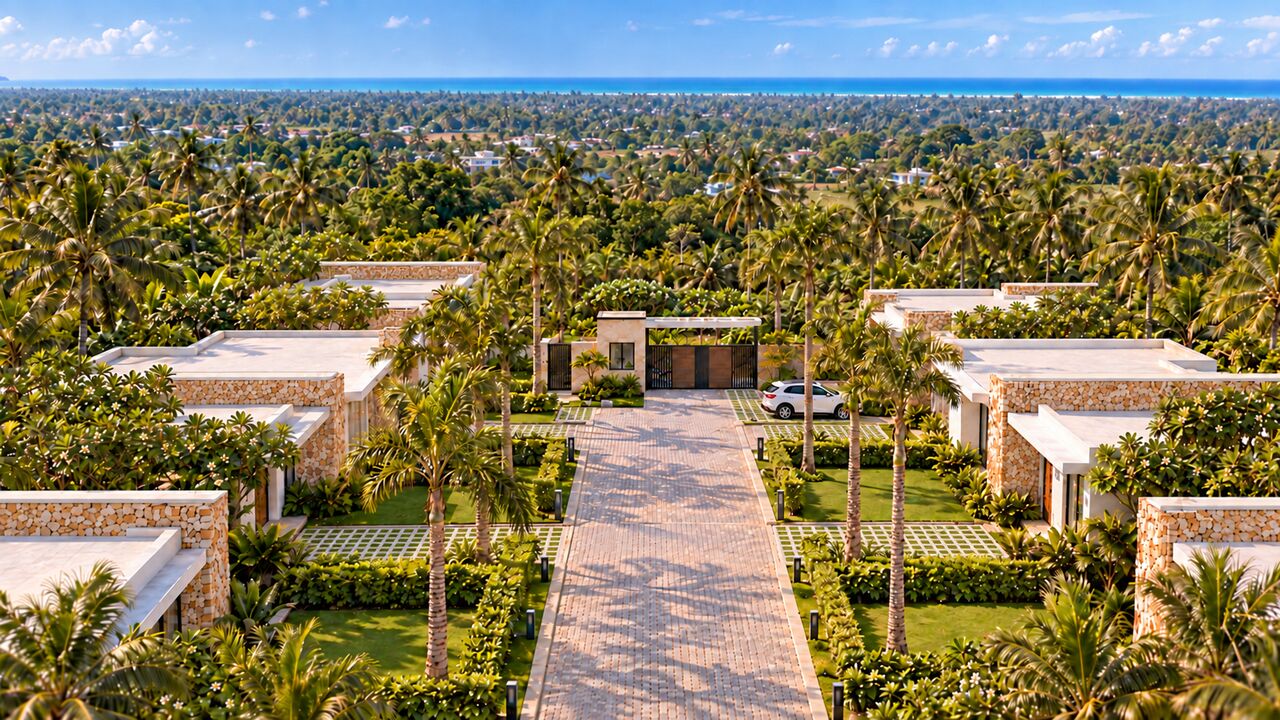
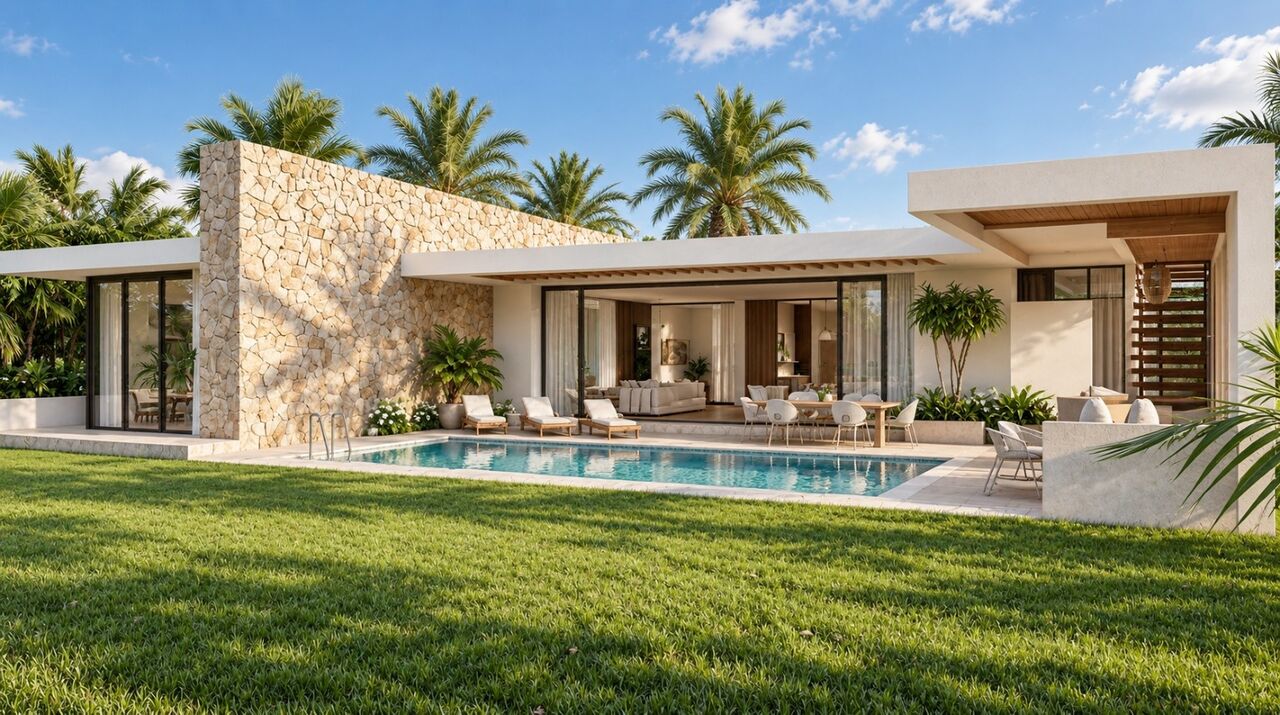
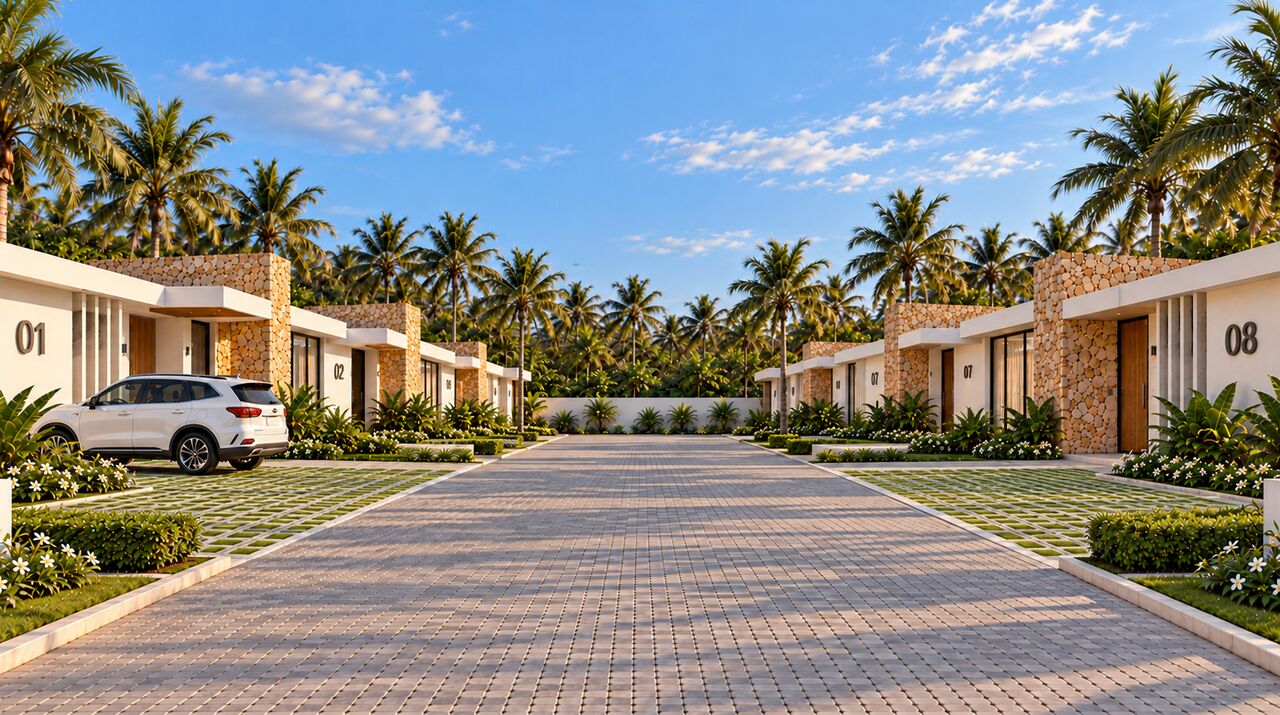
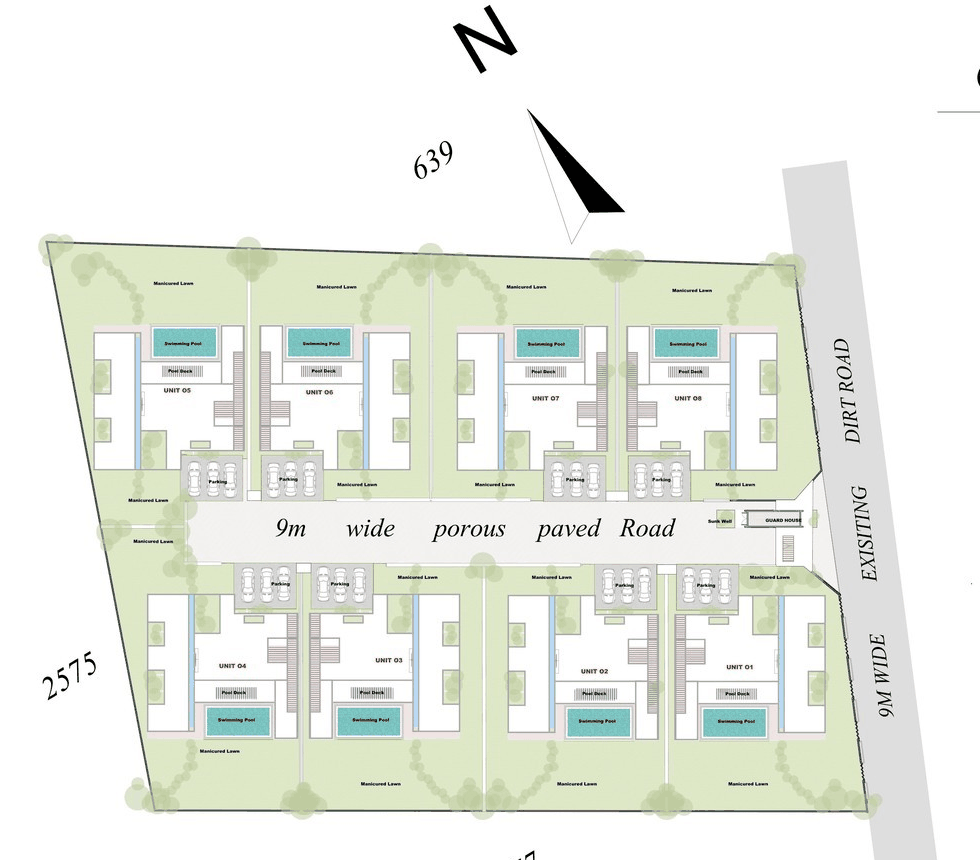
Faraji Marijani is a gated community of eight private-pool villas in Galu, Diani Beach, Kwale County, developed by Msingi Engineering Group (Msingi). It offers three ways to pay: cash purchase, bank financing, or staged payments as the villa is built, within 24 months. The plot and villa package starts from KSh 29,550,000, excluding statutory fees and VAT where applicable, and prices may change. Each villa sits on a titled quarter-acre plot (0.0940 ha) with its own private title, which a lender's valuer and your advocate can check. The single-level villa has three en-suite bedrooms, 214 m² inside, a 9 × 4 m private pool and staff quarters. As of November 2026, 7 of the 8 plots are available. To discuss payment options, reserve a viewing.
Frequently asked questions
What is the average mortgage interest rate in Kenya?
According to reporting on the Central Bank of Kenya's 2025 Bank Supervision Annual Report, the average mortgage interest rate was about 13.5% in 2025, down from 15.2% in 2024. Average commercial bank lending rates were 14.4% in September 2026. Rates vary by bank and borrower, and may be fixed or variable, so ask each lender for a written quote.
Can I get a mortgage for a holiday home in Kenya?
Yes, through a commercial bank mortgage or a diaspora mortgage if you are a Kenyan living abroad, subject to the bank's income and property checks. Subsidised KMRC-backed loans are generally limited to owner-occupied first homes, so a holiday home will usually be financed on commercial terms. Equity release on another property is a further option.
How much deposit do I need for a mortgage in Kenya?
It depends on the bank and product. Co-operative Bank's diaspora page, for example, lists up to 80% financing for buying a developed property, which implies a 20% contribution. Some products lend more. On top of the deposit, budget for stamp duty, legal, valuation and arrangement fees. Ask lenders for a written offer setting out all costs.
Can a foreigner get a mortgage in Kenya?
Kenyan banks' published diaspora products are designed for Kenyan citizens living abroad, so non-citizens should ask lenders directly about eligibility and terms. Many foreign buyers pay cash, release equity from property at home, or use staged payments with a developer. Remember that non-citizens can hold Kenyan land only on leasehold of up to 99 years.
Are staged payments safer than a mortgage?
Not necessarily; they carry different risks. Staged payments avoid interest, but your money goes to the developer before the home is finished, and Kenya has no mandatory escrow for deposits. Reduce the risk by checking the title and approvals, using your own advocate, and linking each payment to a milestone you can verify on site.
Can I claim mortgage interest relief on a holiday home in Kenya?
Generally no. Kenya's mortgage interest deduction, currently up to KSh 360,000 a year, is for interest on a loan to buy, build or improve a home the taxpayer lives in, borrowed from an approved lender. A holiday or rental villa does not normally qualify. Confirm your position with KRA or a tax adviser.
Sources
- MPC Press Release, Meeting of October 7, 2026 (Central Bank of Kenya)
- 2025 Bank Supervision Annual Report (Central Bank of Kenya)
- Kenya's Home Loans Hit Ksh307 Billion as Few People Take Mortgages (Kenyans.co.ke, September 2026)
- How State-linked agency decides who gets affordable housing loans (Business Daily, April 2025)
- Kenya Mortgage Refinance Company
- Mortgage — Co-op Bank Diaspora
- Diaspora FAQs (KCB Bank Kenya)
- Non-resident mortgages (Standard Chartered Kenya)
- Mortgage interest deduction (Grant Thornton Kenya)
- Capital Gains Tax (Kenya Revenue Authority)
- The Ministry of Lands Raises Stamp Duty on Land Transfers (CMS Daly Inamdar)
- What has changed in new anti-money laundering rules? (Business Daily)
See Faraji Marijani for yourself
Eight private-pool villas on titled quarter-acre plots in Galu, Diani. Plot and villa from KSh 29.55M.
Book a private viewing